THE STITCHED BODY (CUERPO COSIDO)
Evelio Moreno's The Stitched Body is a bold dissection of female identity and historical fetishism across a thirty-year generational gap. It confronts the idealized sensuality of Julie Newmar's Catwoman (a 1960s icon) with the re-assembled, psychotic femininity of Michelle Pfeiffer's iteration (a 1990s icon). The monumental waste cardboard of 'The Rough Kiss' subverts the material residue of pop culture, while the intimate watercolor, 'Sutured Icon (1992)', unveils the vulnerability and fragmented memory behind the mask. The artist subverts the ephemeral to achieve a profound psychological statement, forcing a reflection on the transience of icons.
COMPONENT I. EL BESO ÁSPERO (THE ROUGHT KISS)
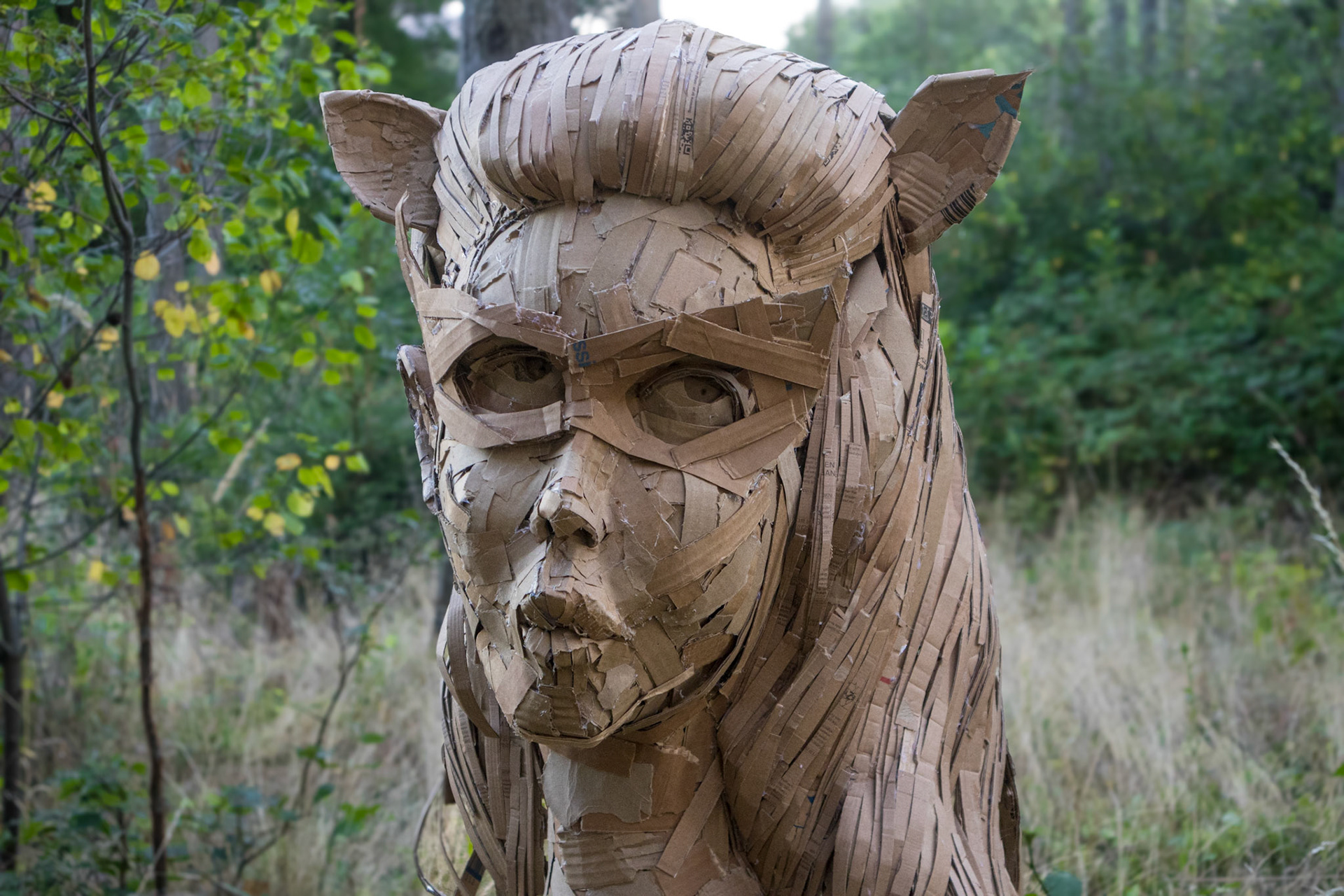
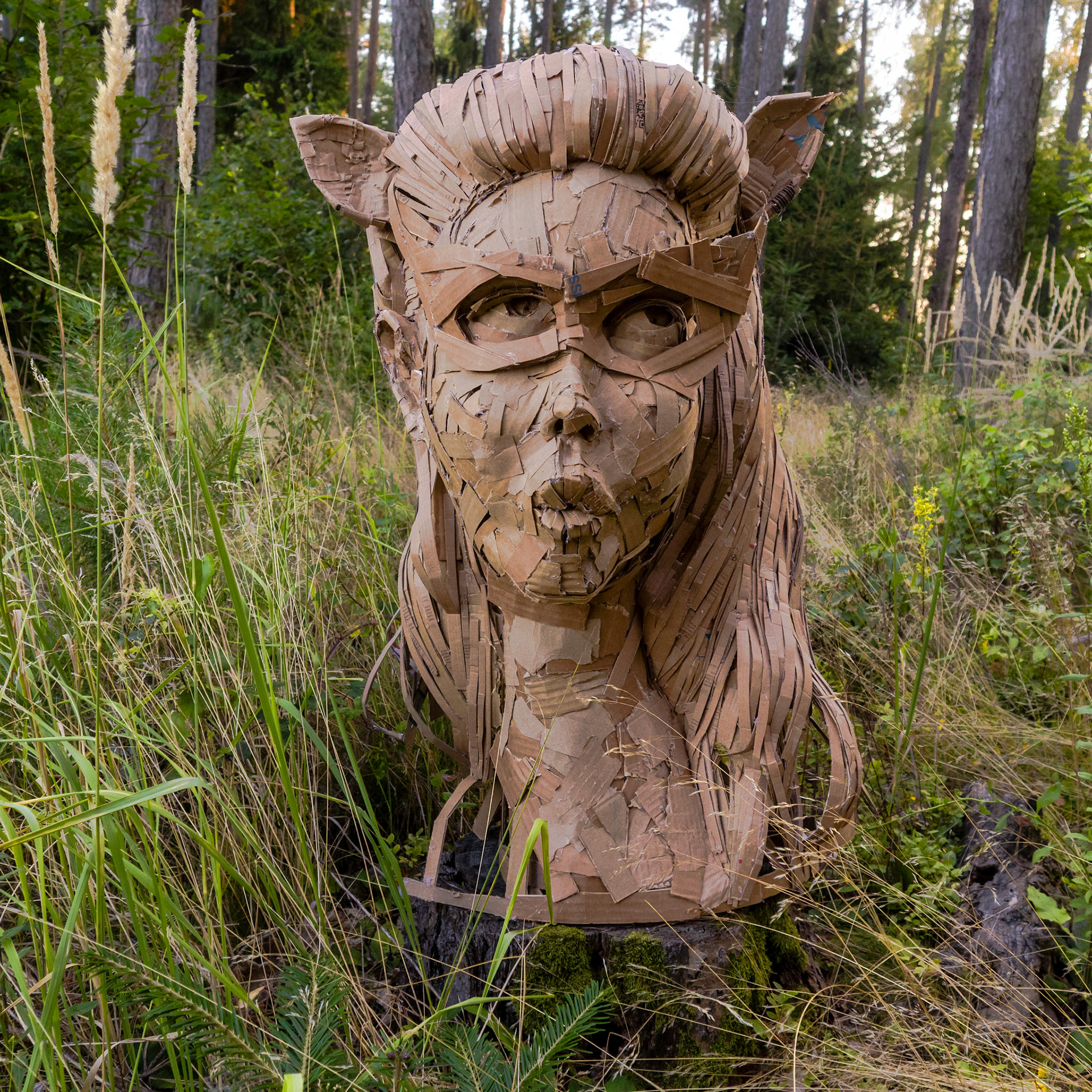
Component I : EL BESO ÁSPERO (The Rough Kiss)
Technique: Reassembled sculpture (Packaging and waste cardboard).
Iconography: Catwoman (Julie Newmar, 1960s).
Dimensions: 85 cm (Height) x 60 cm (Width) x 55 cm (Depth).
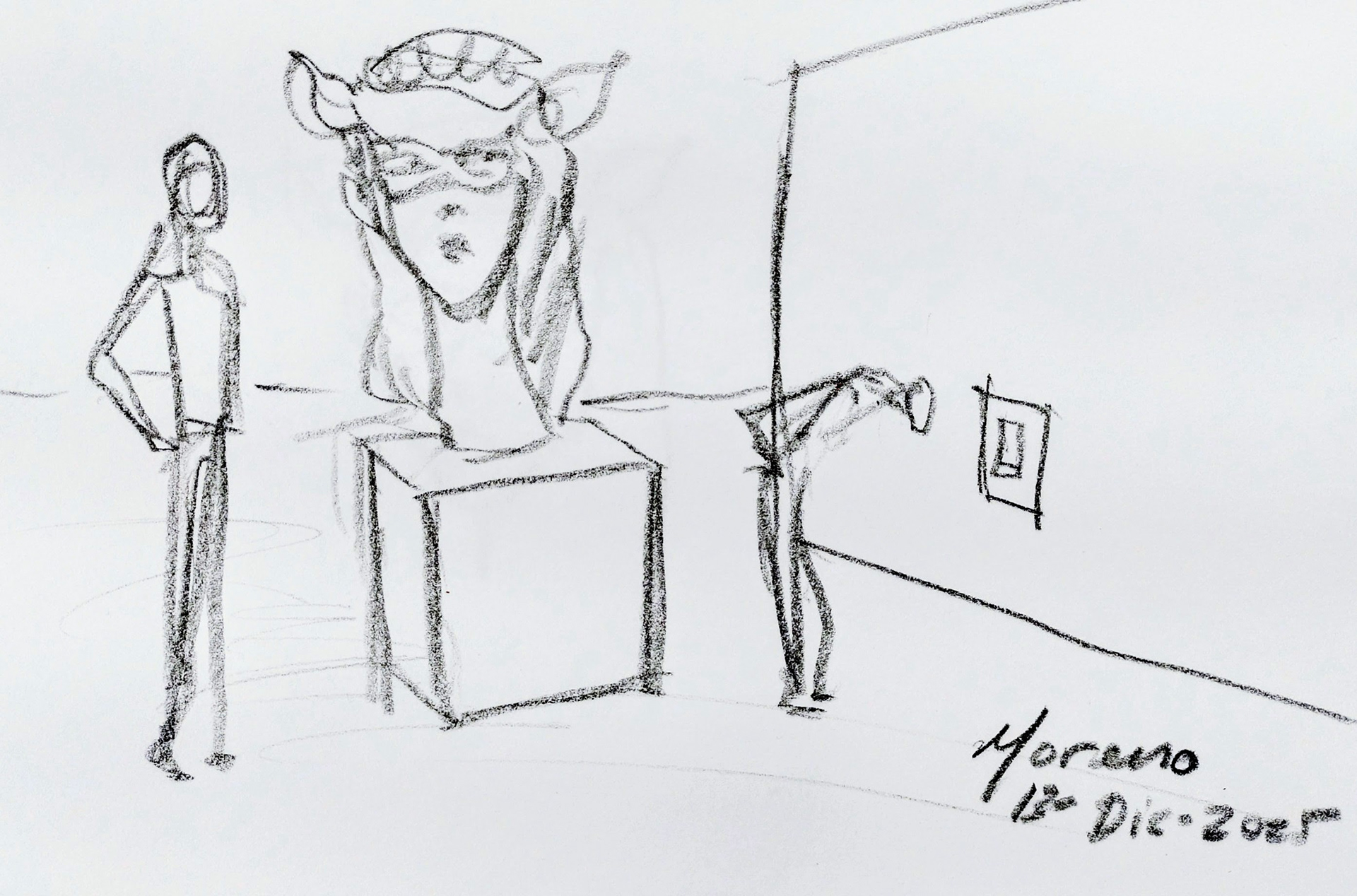
Installation: On base/pedestal, at eye level.
COMPONENT II: ÍCONO SUTURADO DE 1992 (SUTURED ICON FROM 1992)
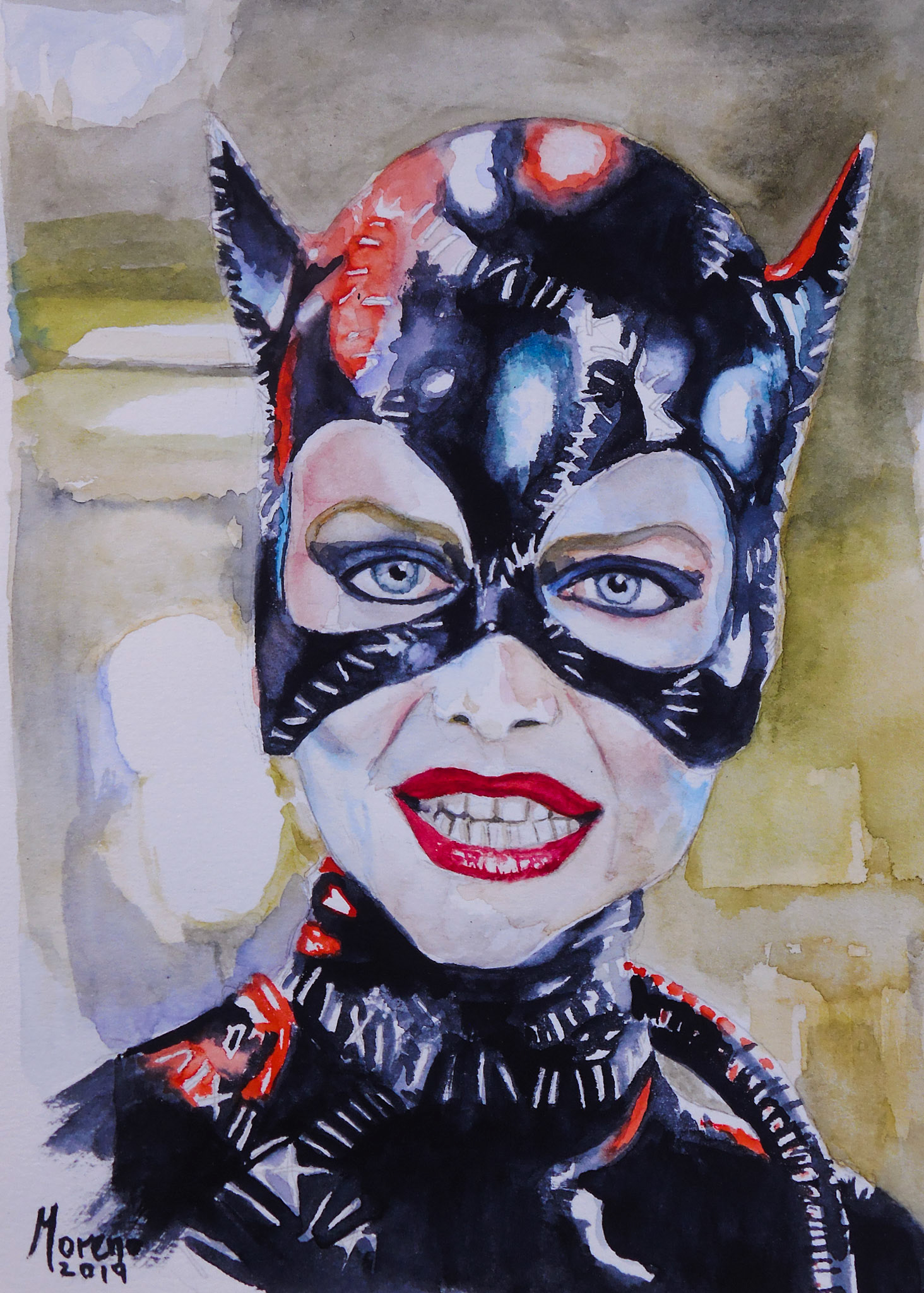
Component: ÍCONO SUTURADO de 1992 (Sutured Icon from 1992)
Technique: Watercolor and mixed media on paper, intense marialuisa.
Iconography: Catwoman (Michelle Pfeiffer, Batman Returns 1992).
Dimensions: 42 cm x 32 cm (Framed).
Installation: Low hanging (forcing a voyeur posture).
THE STITCHED BODY (CUERPO COSIDO): The Confrontation of Scale
"THE STITCHED BODY (CUERPO COSIDO)" is a diptych installation that dissects female identity and historical fetishism through the formal violence of scale and material. The diptych is established as a conceptual battlefield between two eras and two states of being.
I. Raw Material and Monumental Scale
The component "EL BESO ÁSPERO" (The Rough Kiss) stands as an imposing totem. Constructed from post-industrial waste cardboard, the large-format sculpture confronts the viewer with a Catwoman of rough, gashed, and visceral sensuality. The harsh texture of the recycled material not only addresses pop consumption but imposes a fragmented and reconstructed physical presence that is impossible to ignore.
II. Forced Intimacy and Sutured Memory
In sharp contrast, the component "ÍCONO SUTURADO (1992)" compels a renegotiation of the gaze. The watercolor, small and intimate in format, reveals the vulnerability behind the icon. Its mounting is critical: the artwork is framed by an intense red matting (marialuisa), which functions as a visual suture attempting to contain the memory and trauma of the female figure.
Installation Strategy at Kunsthaus Weiz
In the exhibition space, the pieces will be arranged contiguously to generate immediate spatial tension. The installation dictates that the watercolor must be hung at an unusually low height, forcing the viewer into a voyeuristic or humbling posture.
This act of leaning in to view the intimacy contrasts with the challenging, frontal gaze demanded by the monumental cardboard sculpture. The diptych not only explores the transience of pop icons but uses scale and installation to question the viewer's physical position relative to psychological fragility and the predation of identity. The cardboard Catwoman is the public declaration of waste; the watercolor is the intimate secret that demands to be whispered.