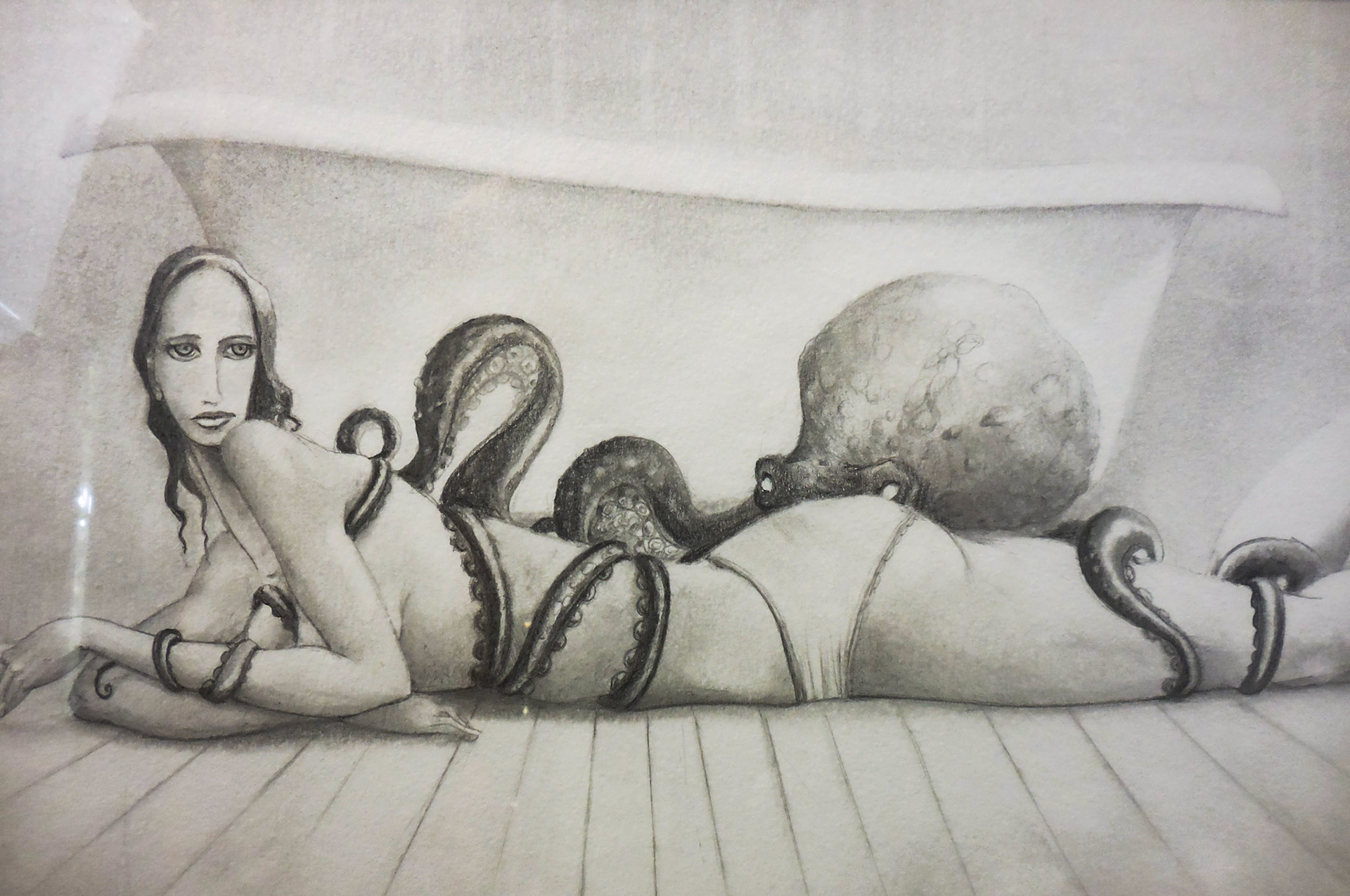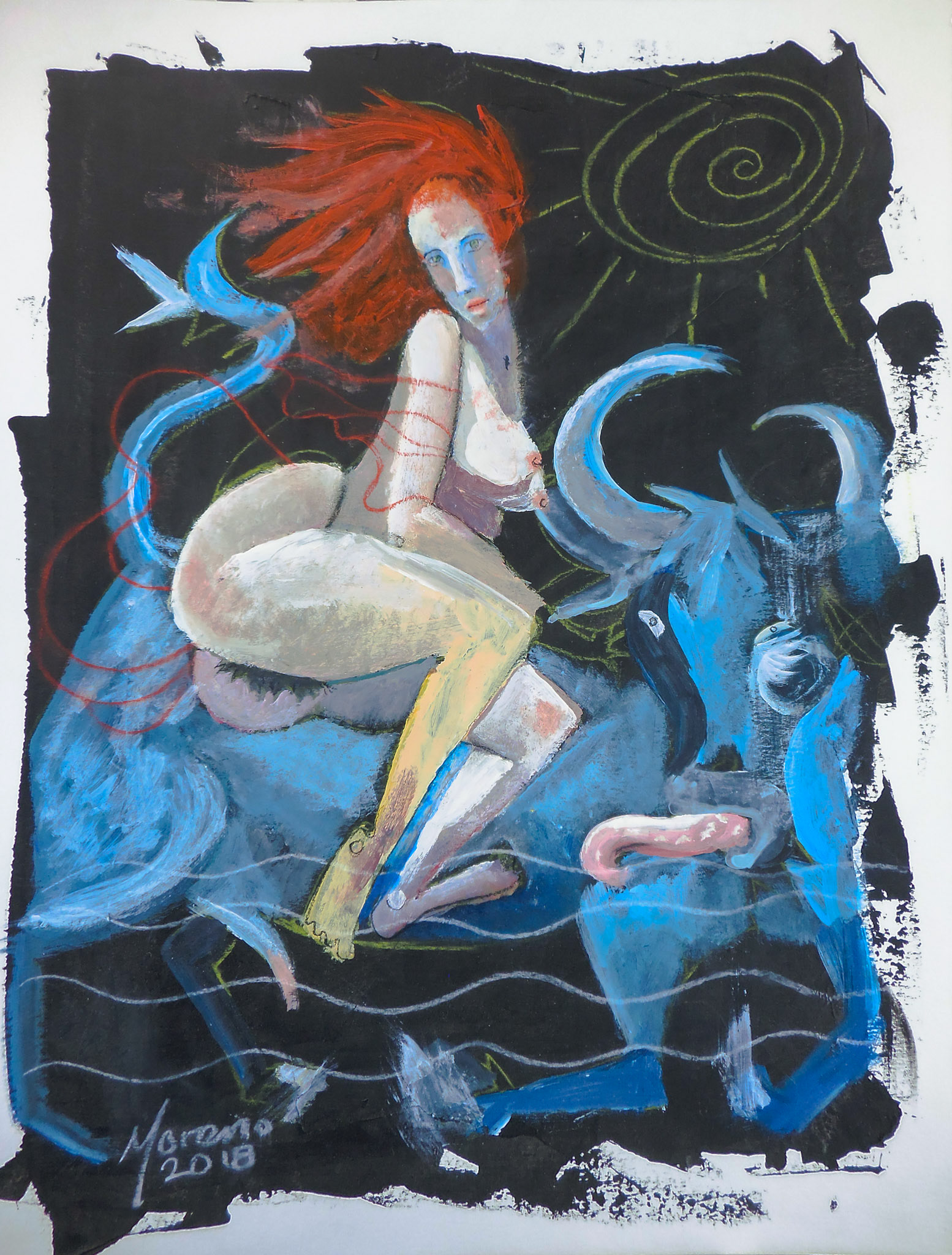
THE GARDEN OF FLUX (Bestiary): Iconographies of Metamorphosis
Conceptual Statement
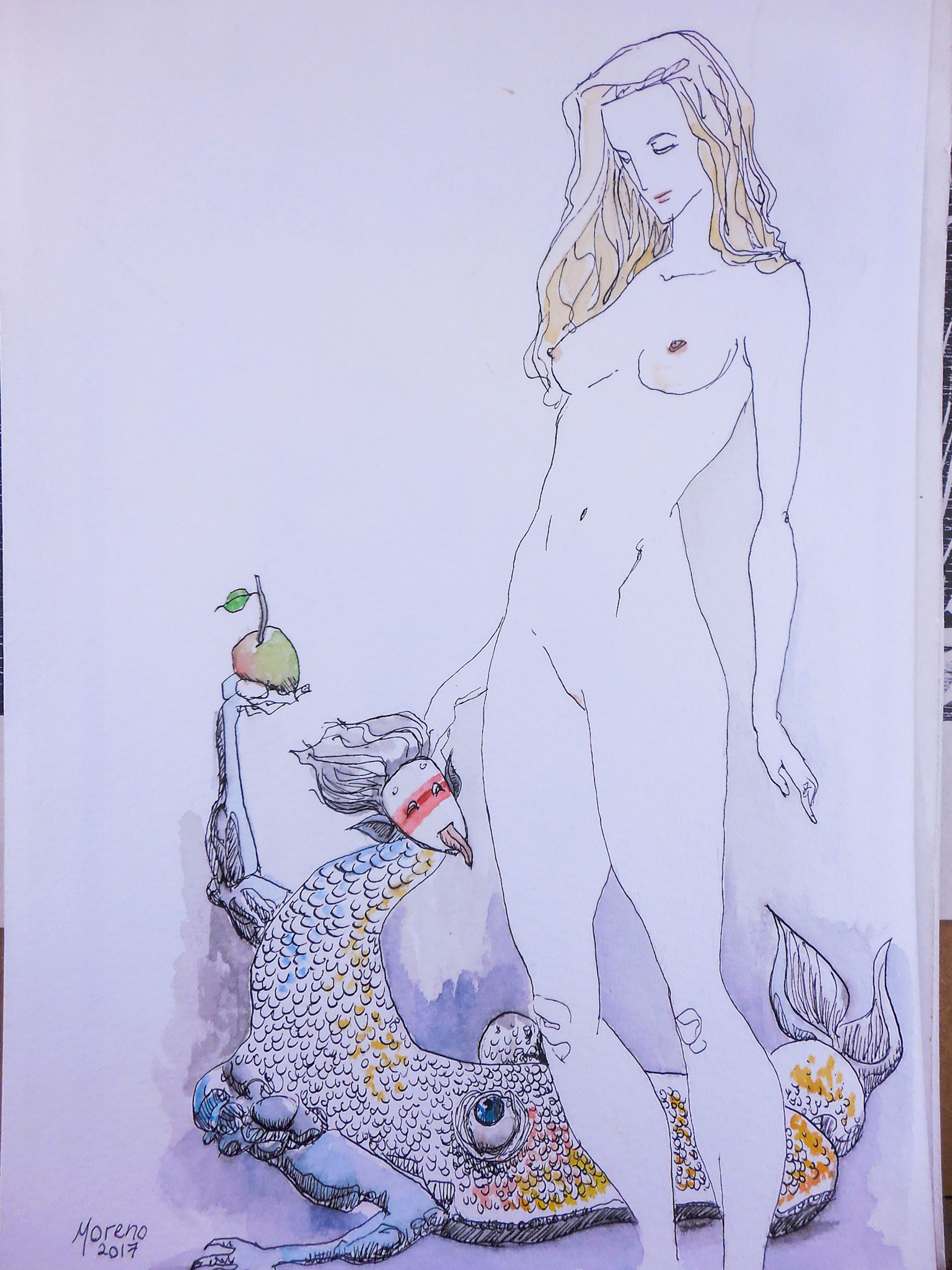
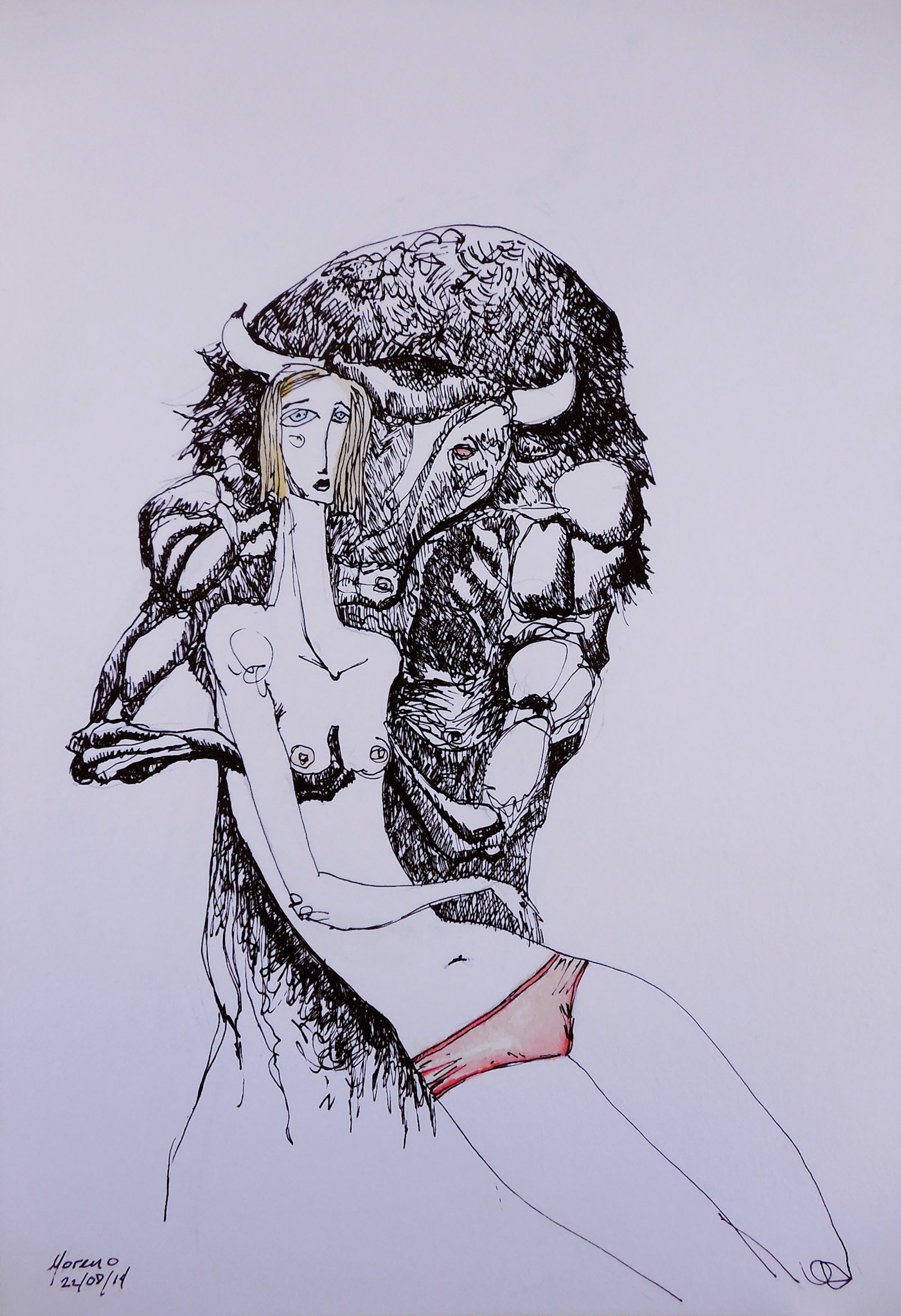
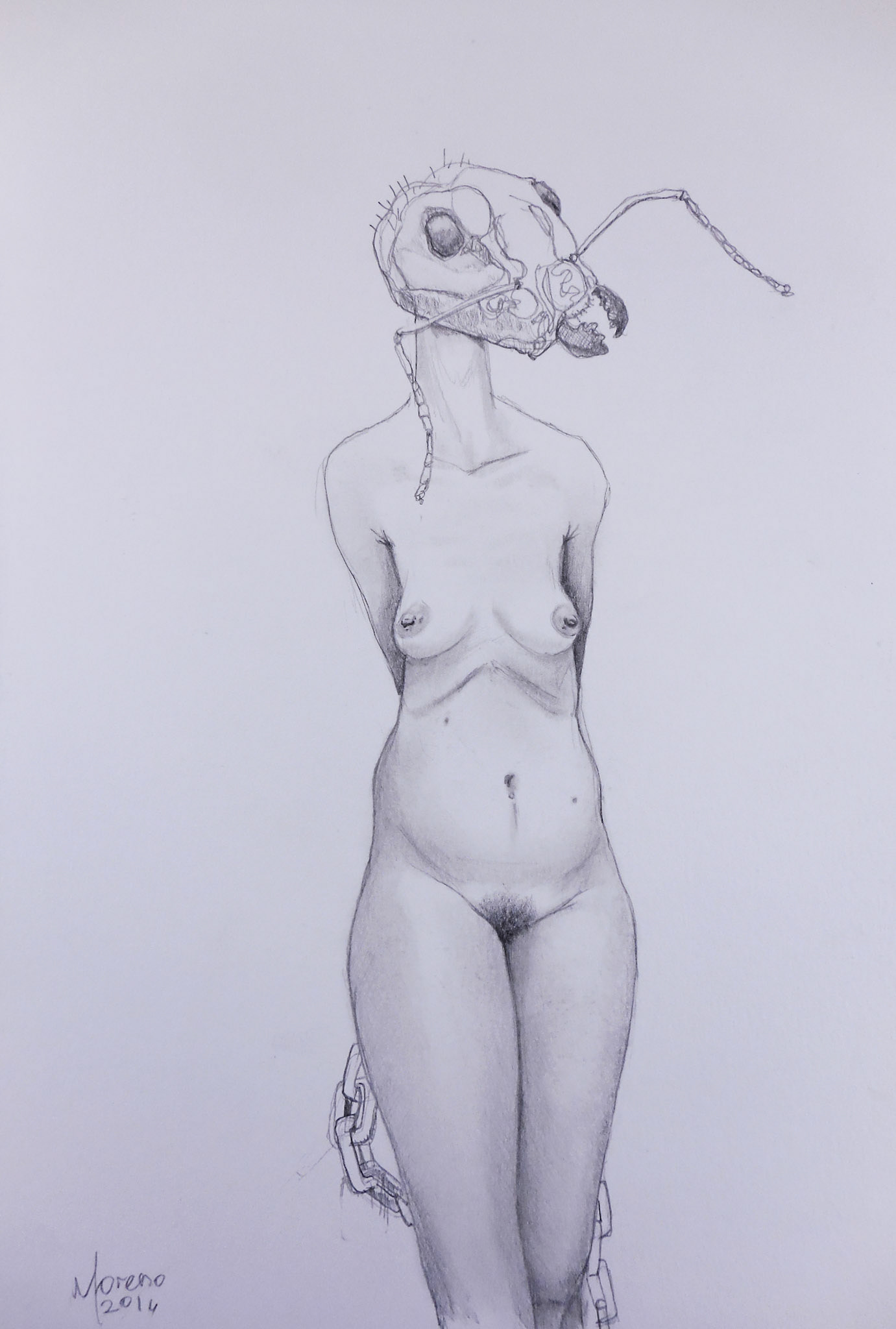
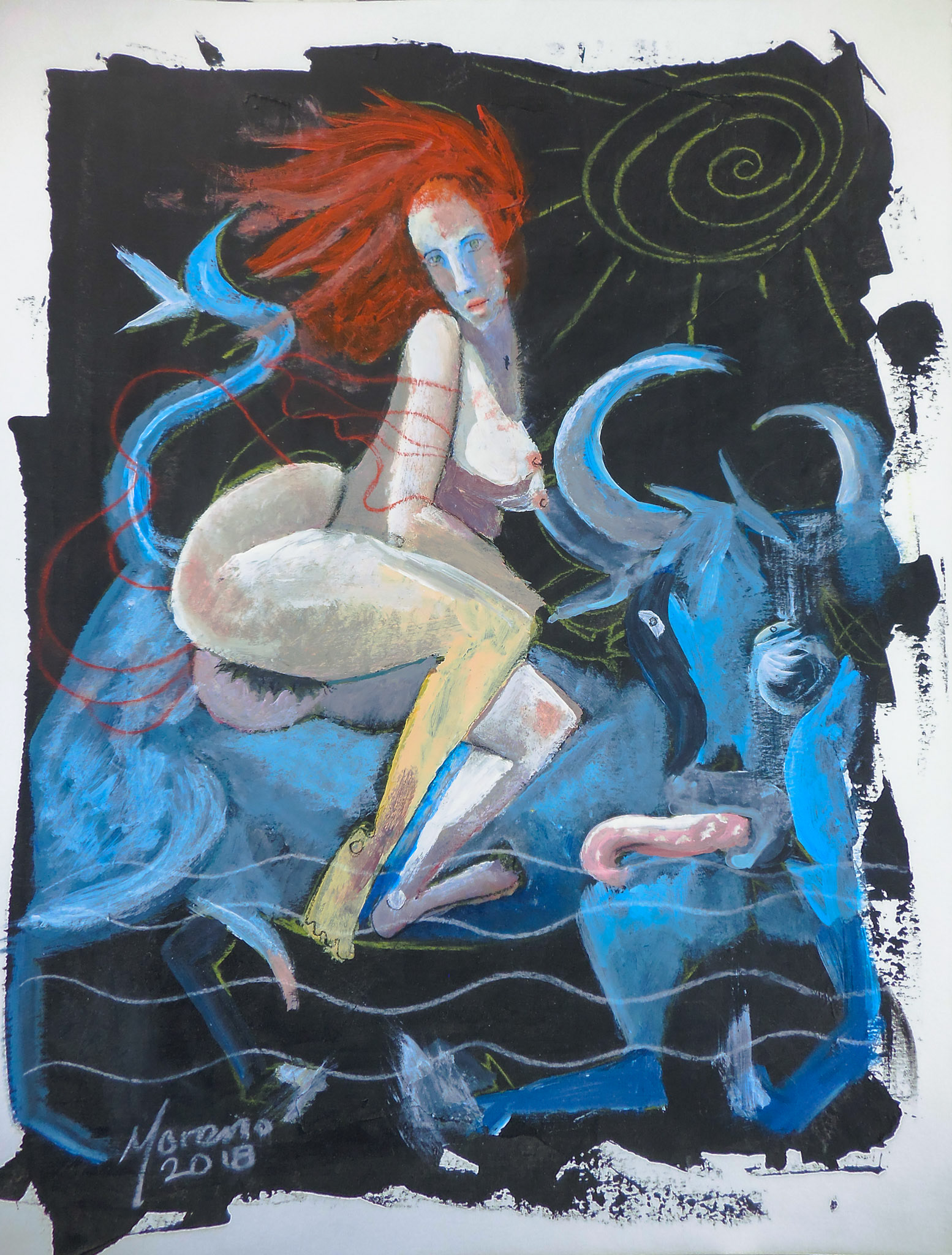
THE GARDEN OF FLUX (Bestiary) is an investigation into the body as an archetypal territory and a field of Metamorphosis. This series is centrally positioned within III. Narratives of Flux by exploring radical transformations of identity and physical form through the filter of classical and biblical mythology.
The works function as an updated Bestiary, where human and animal figures are sutured to narrate the tension between primitive desire and divine punishment. Stories such as Diana and Actaeon (the revenge of the gaze) and Adam and Eve (the fall and guilt) are recontextualized to reflect upon:
Forbidden Desire: The vulnerability of the body to the invasive gaze.
Transformation: The physical body dissolving into the animal archetype (man turning into a stag, woman into a monster).
Unlike previous series which fragment the body with matter or newsprint, this collection utilizes painting and drawing (ink, watercolor) to capture the fluidity of myth, demonstrating that narrative is the most potent force of Metamorphosis. The "Garden" becomes the space of the subconscious where the fable is activated, and the body serves as the vehicle for perpetual change.
I. DÍPTICO: Venganza Diana/Acteón (Vengeance: Diana/Actaeon Diptych)
This diptych investigates the mythical punishment of Actaeon—the conversion of a man into a stag for the simple act of looking upon the divine body—through a loop of inverted materials.
The first piece (Diana) is manifested as a digital print (Fine Art Print), representing the vision of the body in its synthetic and ephemeral state. The second piece (Actaeon) is created using watercolor and ink on paper, anchoring the stag’s punishment in the matter and the analogous gesture of painting.
The material inversion underscores the perpetual FLUX: transgression and metamorphosis exist simultaneously on the narrative plane and in the materiality of the work.
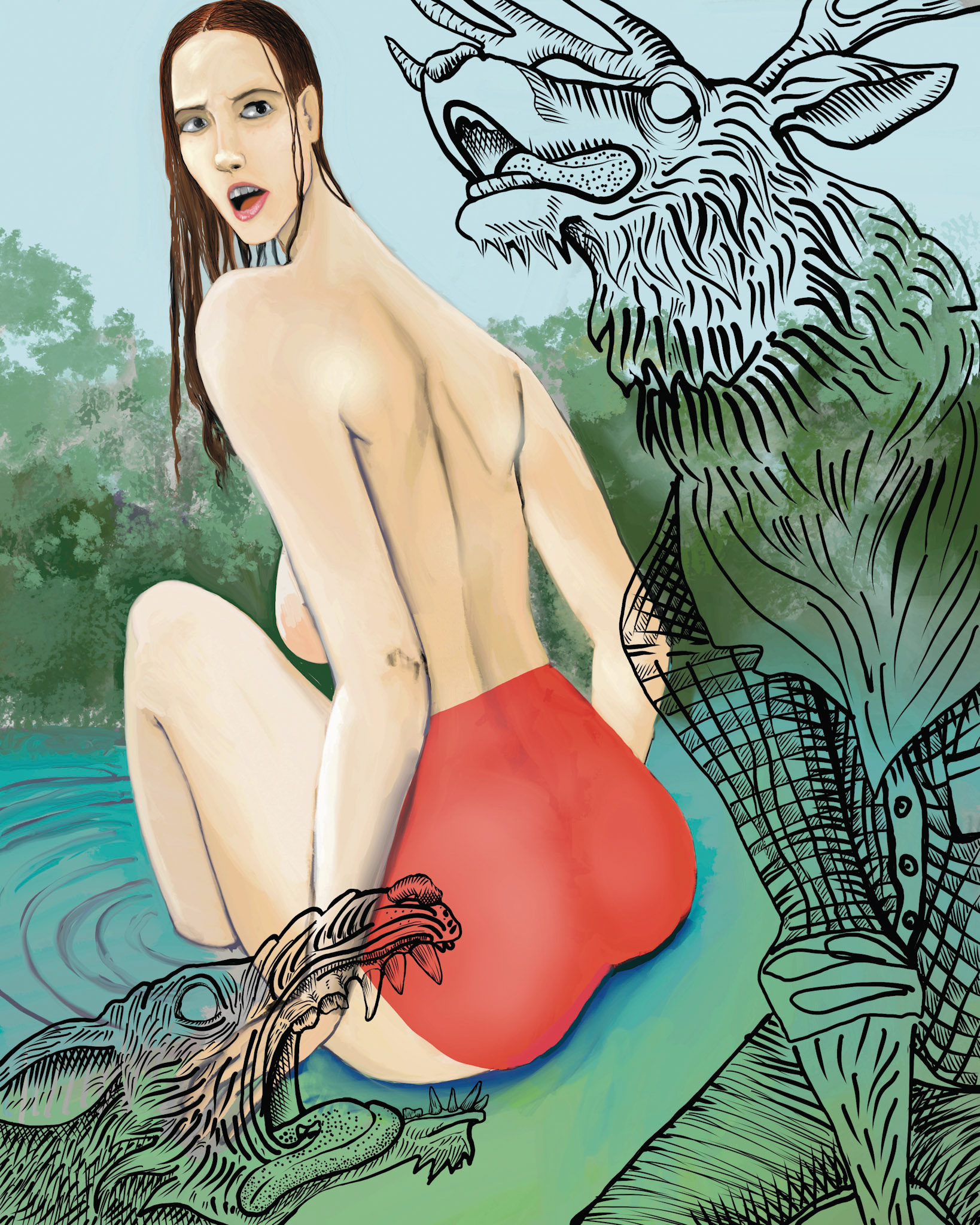
Diana, Forbidden Desire
The first part of the Actaeon diptych. It represents the punishment for the invasive gaze. The divine body, surprised in its intimacy, is protected by the iconography of the hunt (the stag and the dog), foreshadowing the violent transformation and vengeance.
Technique: Digital Fine Art Print (from tablet illustration) on Archival Paper.
Concept of Flux: The synthetic and ephemeral vision of the body.
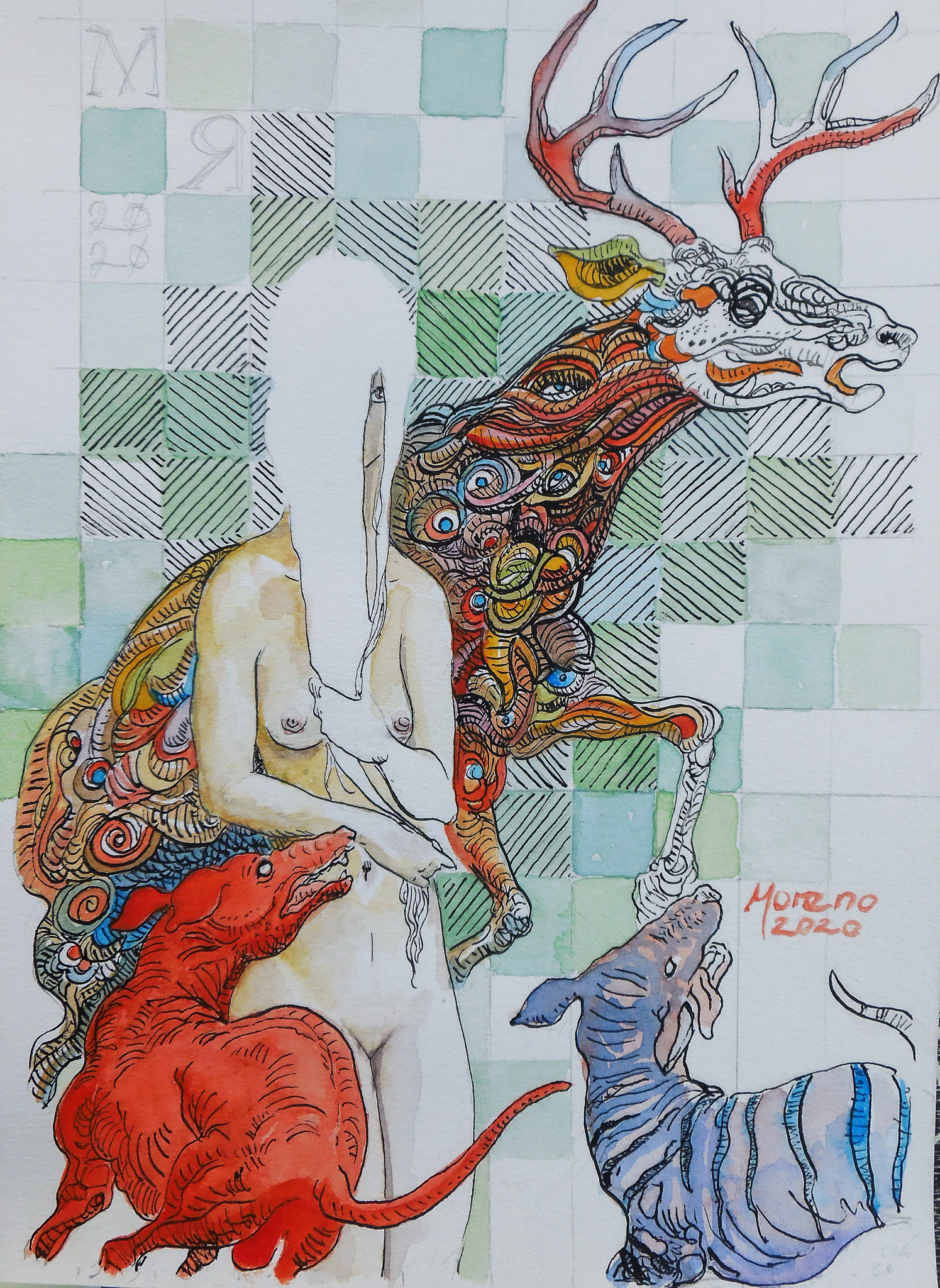
Actaeon and the Hunt
The culmination of Flux. Actaeon, transformed into a stag due to his visual transgression, is a victim of his own desire. The human body dissolves into the animal body, symbolizing the loss of identity before the archetypal force of retribution.
Technique: Watercolor, Ink, and Graphite on Paper.
Concept of Flux: The material and analogous consequence of the punishment.
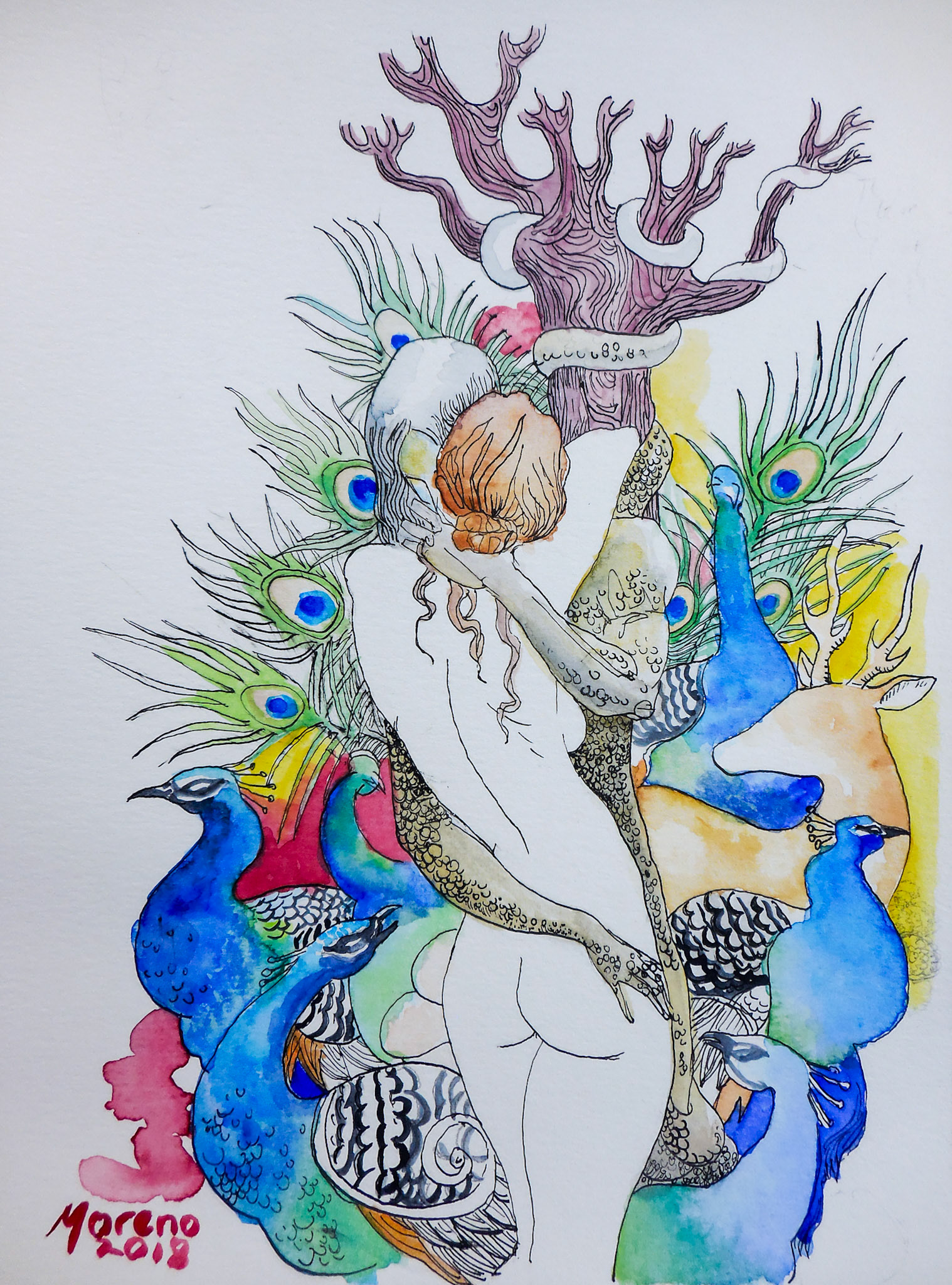
II. The Fall of the Garden
Iconography of The Fall recontextualized. The body is the site where temptation and guilt meet, suturing the human figure with the Peacock (immortality/vanity) and the Serpent (knowledge). The canvas becomes Eden, a space of primitive judgment.
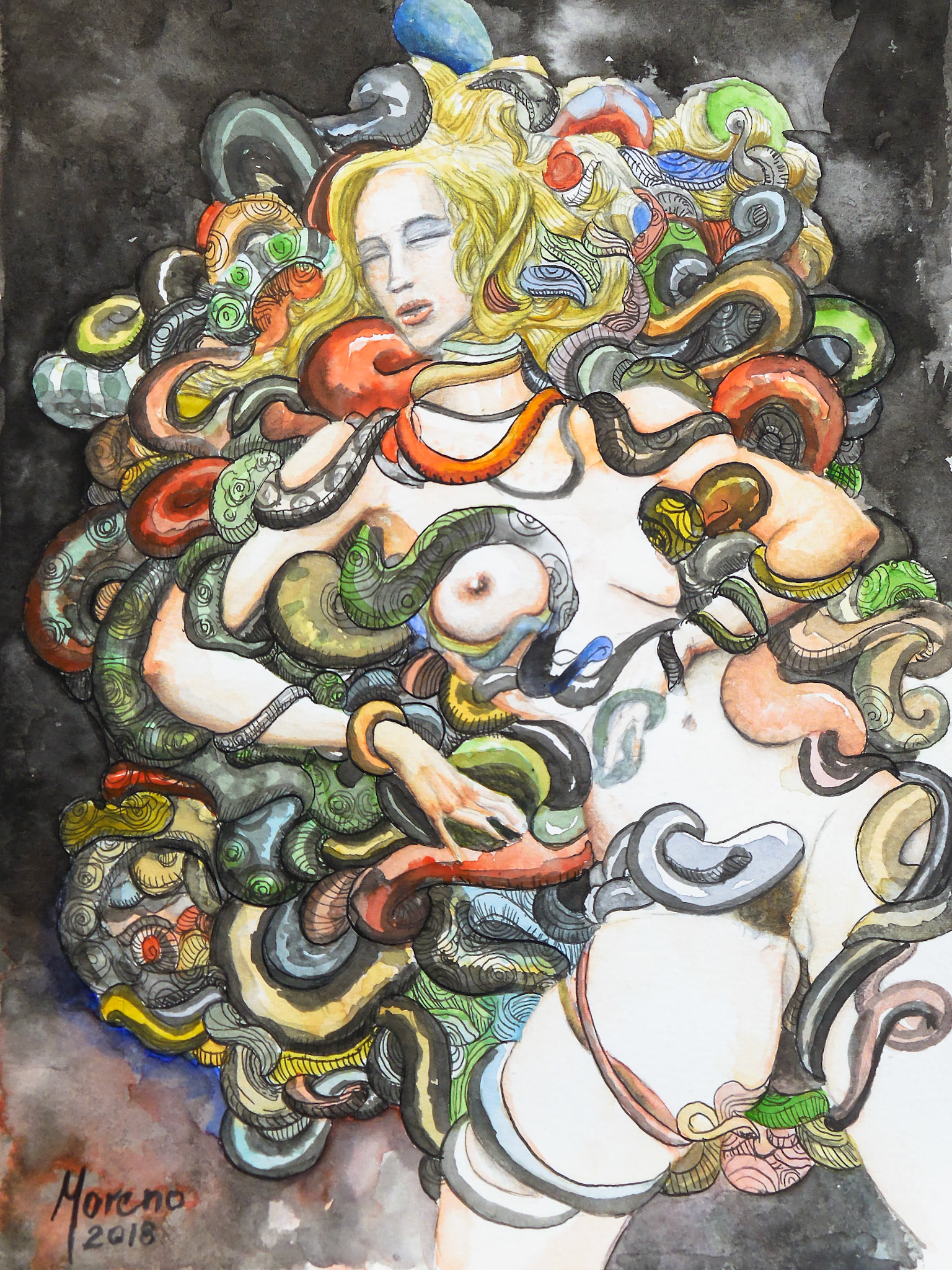
III. Medusa's Gaze
Metamorphosis by punishment. The figure serves as a vehicle of power and terror. The body, wrapped in a swarm of snakes, explores the vulnerability of beauty when transformed by a narrative of curse. (COVER IMAGE)